Aikyam- A Data-Driven Sports Platform

Aikyam- A Data-Driven Sports Platform

Aikyam- A Data-Driven Sports Platform

Project Type
Project Type

Internship Project

Internship Project

Company
Company

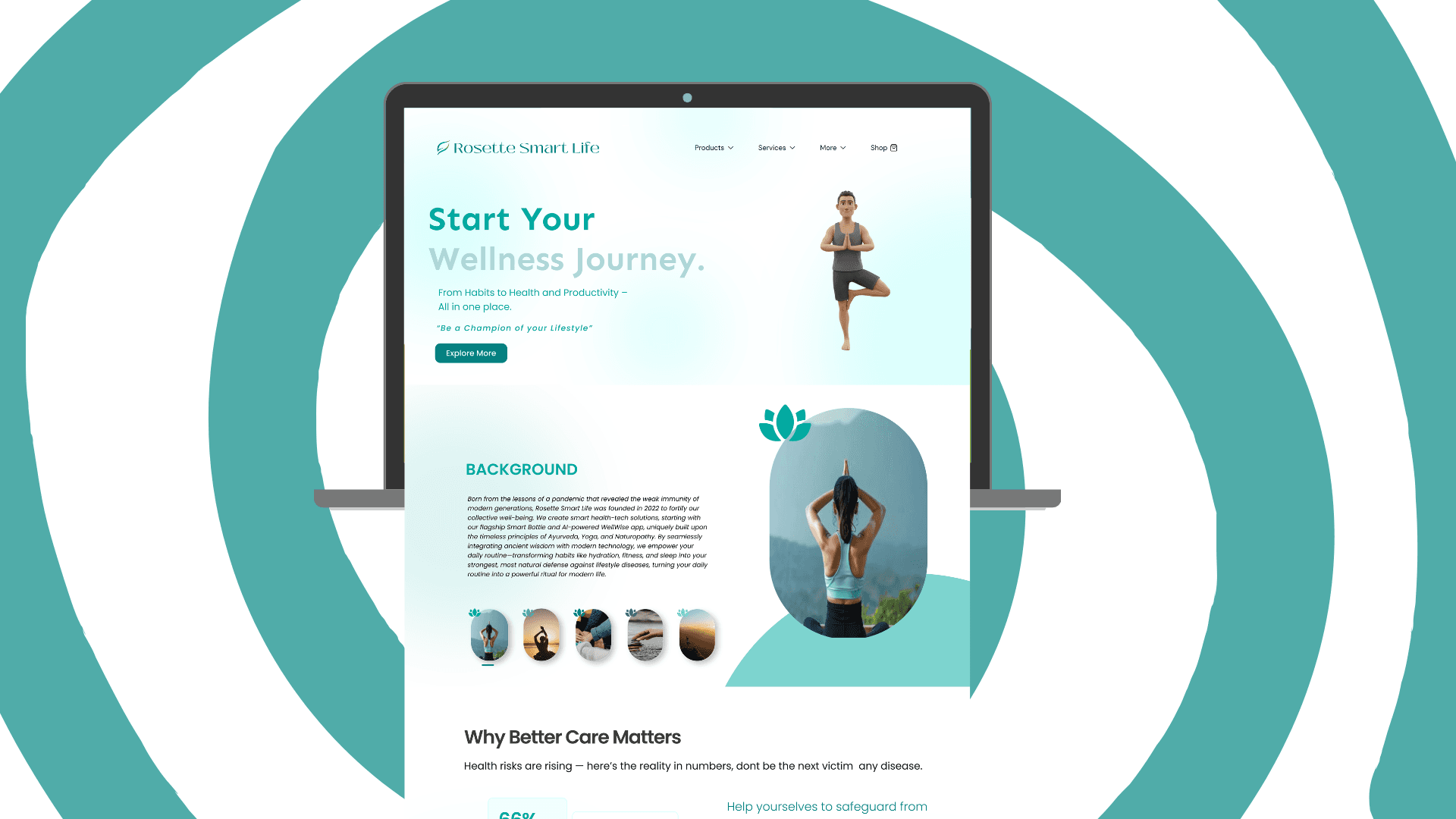
Rosette Smart Life

Rosette Smart Life

Industry

Health & Wellness

Industry

Sports Technology

Duration
Duration

2 Months

2 Months

Industry

Sports Technology

Duration

2 Months

Sports

Sports

UX/UI

image
image

Overview.

Overview.

Overview.

A data-driven performance tracking platform for athletes and coaches

A data-driven performance tracking platform for athletes and coaches

Aikyam is a sports performance tracking platform designed to digitize athlete data and support data-driven coaching. The platform bridges on-field training and performance analysis through dedicated interfaces for athletes and coaches.

My Role

My Role

UI/UX Design Intern Research to Interface

Led research and design efforts for Aikyam, including field interviews with athletes, flow definition, and interface design. Transformed real-world training insights into structured UX solutions for athletes and coaches.

Team

Team

Solo UX Designer · Founder Collaboration

Collaborated closely with the company founder throughout the project, contributing as the sole UX design intern. Involved in research, ideation, and interface decisions, with direct influence on shaping the product experience.

Problem Statement .

Problem Statement .

Problem Statement .

In many sports training environment athlete performance data is still recorded manually using paper based method or basic spreadsheet.This process is time-consuming, prone to errors, and lacks real-time accessibility, making it difficult for athletes and coaches to track progress and make informed decisions.

Design Goals.

Design Goals.

Design Goals.

Enable structured performance tracking for athletes

  • Help coaches analyze progress through clear data views

  • Simplify complex sports metrics into understandable insights

  • Support both training-time and review-time use

Design Thinking & System Structure.

Design Thinking & System Structure.

Design Thinking & System Structure.

This project followed a research-driven approach combining primary field research and secondary analysis.

Research Approach

Research Approach

Primary research involved face-to-face interviews with athletes at Udupi Stadium to understand real training routines, performance tracking methods, and pain points.
These findings were complemented with secondary research, including competitor analysis and review of sports performance platforms, to identify usability gaps and industry patterns.

Competitor Analysis
Competitor Analysis
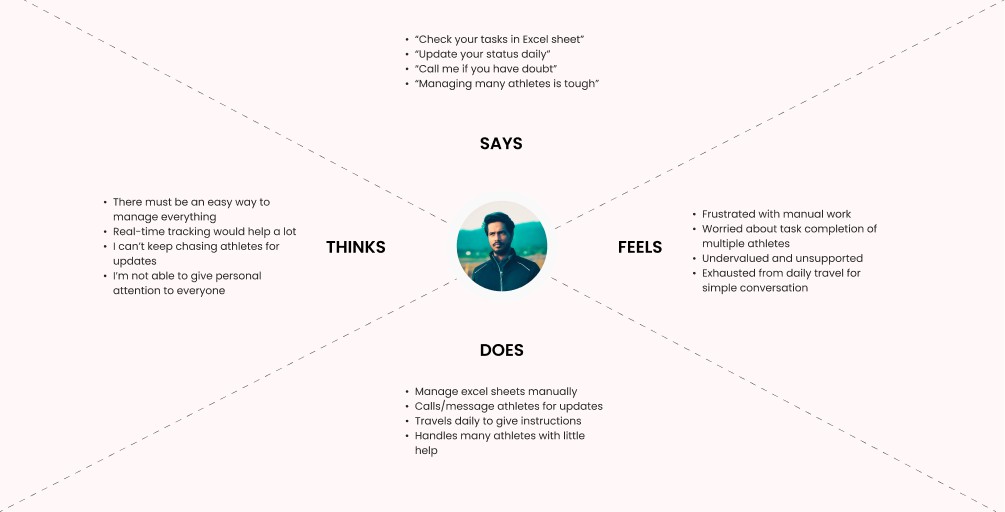
Empathy Map -Athlete
Wireframes
Wireframes
Persona - Trainer
Persona - Trainer
Emapthy Map -Trainer
Feature Brainstorming
Userflow
Userflow
Persona -Athlete
Persona -Athlete
Brainstorming
Brainstorming
IA
IA
Competitor Analysis
Competitor Analysis
Emapthy Map -Trainer
Empathy Map -Athlete
IA
IA
Userflow
Userflow
Persona - Trainer
Persona - Trainer
Persona -Athlete
Persona -Athlete
Brainstorming
Brainstorming
Feature Brainstorming
Wireframes
Wireframes

Research Insights

  • Performance tracking is manual, fragmented, and spreadsheet-dependent

  • Excel files act as static references, not active training tools

  • Coachathlete communication is unstructured and disconnected

  • Training updates lack real-time visibility and interaction

  • Missed activities often go unnoticed or unreported

  • Managing multiple athletes creates high operational overload

  • Task completion cannot be reliably verified

Performance tracking should empower action, not create additional work.

Solution

Solution

Solution

A unified sports performance ecosystem combining a mobile application for athletes and coaches with an admin interface for associations and trainers, enabling real-time performance tracking, structured training workflows, and centralized team management.

Key Learnings

Key Learnings

Key Learnings

Real-world research changes design priorities

Conducting face-to-face interviews with athletes revealed practical challenges that were not visible through assumptions or desk research.

Human-Centered Approach

Designing experiences that prioritize user needs and behaviors.

Domain Knowledge Shapes Better UX

Learning the sports domain helped transform performance and coaching concepts into clear, usable digital experiences.

Real-world research changes design priorities

Conducting face-to-face interviews with athletes revealed practical challenges that were not visible through assumptions or desk research.

Conducting face-to-face interviews with athletes revealed practical challenges that were not visible through assumptions or desk research.

Systems matter more than individual screens
Human-Centered Approach

Designing for athletes, coaches, and associations highlighted the importance of connected workflows over isolated UI elements.

Designing experiences that prioritize user needs and behaviors.

Domain Knowledge Shapes Better UX

Learning the sports domain helped transform performance and coaching concepts into clear, usable digital experiences.

Learning the sports domain helped transform performance and coaching concepts into clear, usable digital experiences.

Create a free website with Framer, the website builder loved by startups, designers and agencies.